
ROLE
Design Strategist
Design Strategist
UX Designer
UX Designer
UX Researcher
UX Researcher
SKILLS
Experience Design
Experience Design
Ethnographic Research
UX Research
Digital Rendering
Digital Rendering
TIMELINE
5 months
5 months
Los Angeles, CA
Los Angeles, CA
TEAM
Nichakarn Kuphirun
Nichakarn Kuphirun
James Stevens
James Stevens
As the Iovine Young Academy expanded, the third floor of Iovine and Young Hall remained unfinished. With student enrollment increasing and new programs developing, there was a clear need for more physical space.
But this wasn’t just about adding square footage. The opportunity was to think intentionally about how space could support the way the community actually works.
As the Iovine Young Academy expanded, the third floor of Iovine and Young Hall remained unfinished. With student enrollment increasing and new programs developing, there was a clear need for more physical space.
But this wasn’t just about adding square footage. The opportunity was to think intentionally about how space could support the way the community actually works.
As the Iovine Young Academy expanded, the third floor of Iovine and Young Hall remained unfinished. With student enrollment increasing and new programs developing, there was a clear need for more physical space.
But this wasn’t just about adding square footage. The opportunity was to think intentionally about how space could support the way the community actually works.
A Growing Program Needs More Than Just Space
A Growing Program Needs More Than Just Space
THE PROBLEM
THE PROBLEM
THE PROBLEM

Design a Space That Works Across Roles and Disciplines
Design a Space That Works Across Roles and Disciplines
THE CHALLENGE
THE CHALLENGE
THE CHALLENGE
The Academy blends design, business, and technology. That means no single space works the same for everyone. Students need room to build and collaborate. Faculty need places to focus or host meetings. Industry partners need spaces where they can observe and engage.
The challenge was to design a space that could support these different needs without feeling disjointed or overly programmed.
The Academy blends design, business, and technology. That means no single space works the same for everyone. Students need room to build and collaborate. Faculty need places to focus or host meetings. Industry partners need spaces where they can observe and engage.
The challenge was to design a space that could support these different needs without feeling disjointed or overly programmed.
The Academy blends design, business, and technology. That means no single space works the same for everyone. Students need room to build and collaborate. Faculty need places to focus or host meetings. Industry partners need spaces where they can observe and engage.
The challenge was to design a space that could support these different needs without feeling disjointed or overly programmed.
Space Alone Doesn’t Create Community, But It Can Support It
Space Alone Doesn’t Create Community, But It Can Support It
OUR INSIGHT
OUR INSIGHT
OUR INSIGHT
Across interviews and observations, one thing became clear. The value of the space wasn’t just in what it provided functionally. It was in how it encouraged people to spend time, connect, and stay longer than they had to. We needed to design for those moments, not just the tasks.
Across interviews and observations, one thing became clear. The value of the space wasn’t just in what it provided functionally. It was in how it encouraged people to spend time, connect, and stay longer than they had to. We needed to design for those moments, not just the tasks.
Across interviews and observations, one thing became clear. The value of the space wasn’t just in what it provided functionally. It was in how it encouraged people to spend time, connect, and stay longer than they had to. We needed to design for those moments, not just the tasks.
Learning from Other Innovation Spaces
Learning from Other Innovation Spaces
MARKET SCAN
MARKET SCAN
MARKET SCAN
To guide our direction, we studied how other creative campuses, studios, and academic environment were designed. We analyzed how they used modular layouts, balanced openness with focus, and supported both individual and group work.
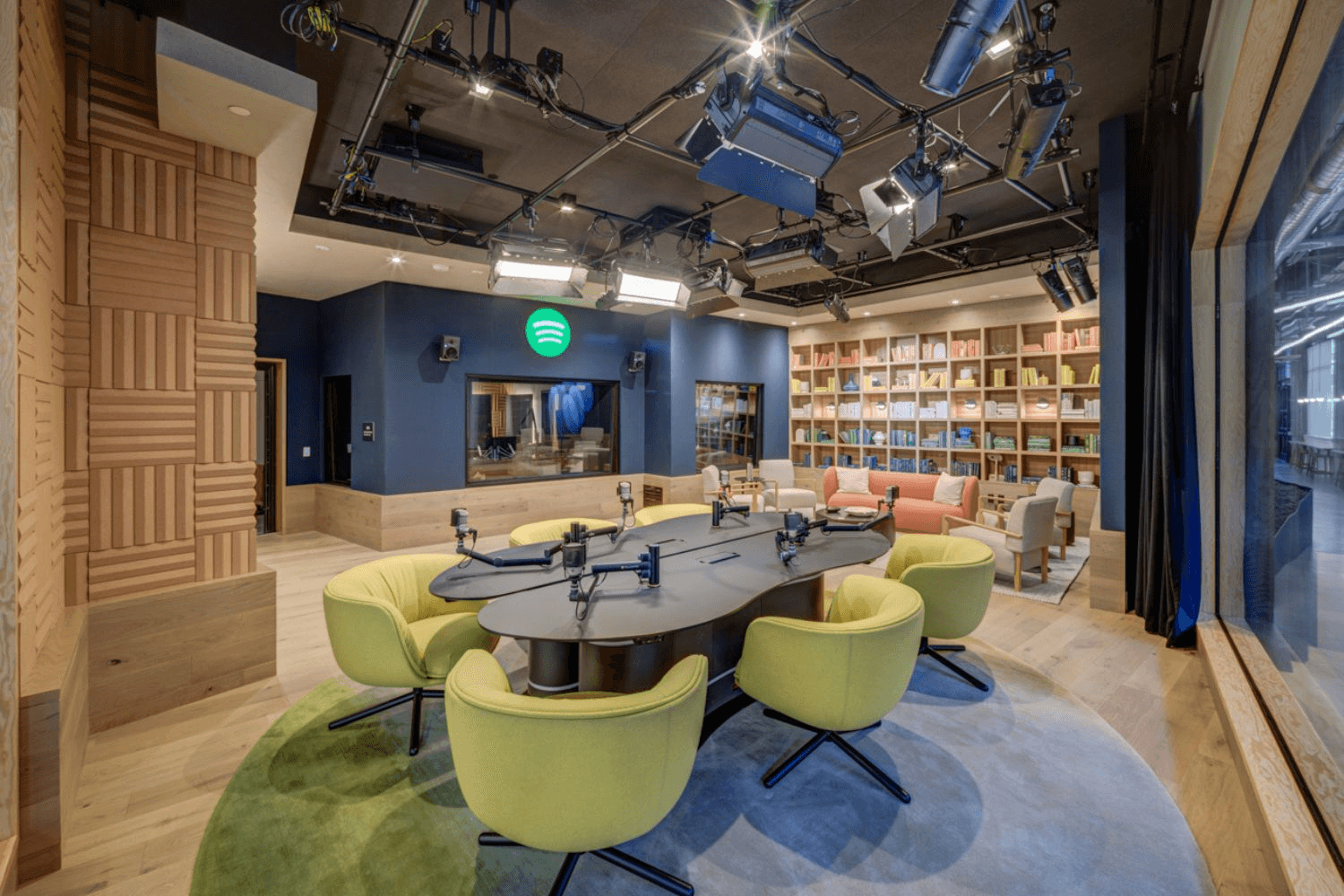
We also visited the offices of Spotify and Red Bull to observe how their environments shape behavior, culture, and creative flow. These firsthand visits helped us understand how physical space can reflect and reinforce an organization’s identity.
We pulled key takeaways into a set of design references. These helped align the team around what worked, what didn’t, and what felt right for the IYA context.
To guide our direction, we studied how other creative campuses, studios, and academic environment were designed. We analyzed how they used modular layouts, balanced openness with focus, and supported both individual and group work.
We also visited the offices of Spotify and Red Bull to observe how their environments shape behavior, culture, and creative flow. These firsthand visits helped us understand how physical space can reflect and reinforce an organization’s identity.
We pulled key takeaways into a set of design references. These helped align the team around what worked, what didn’t, and what felt right for the IYA context.
To guide our direction, we studied how other creative campuses, studios, and academic environment were designed. We analyzed how they used modular layouts, balanced openness with focus, and supported both individual and group work.
We also visited the offices of Spotify and Red Bull to observe how their environments shape behavior, culture, and creative flow. These firsthand visits helped us understand how physical space can reflect and reinforce an organization’s identity.
We pulled key takeaways into a set of design references. These helped align the team around what worked, what didn’t, and what felt right for the IYA context.

Aligning a Diverse Set of Needs
Aligning a Diverse Set of Needs
STAKEHOLDER INTERVIEWS
STAKEHOLDER INTERVIEWS
STAKEHOLDER INTERVIEWS
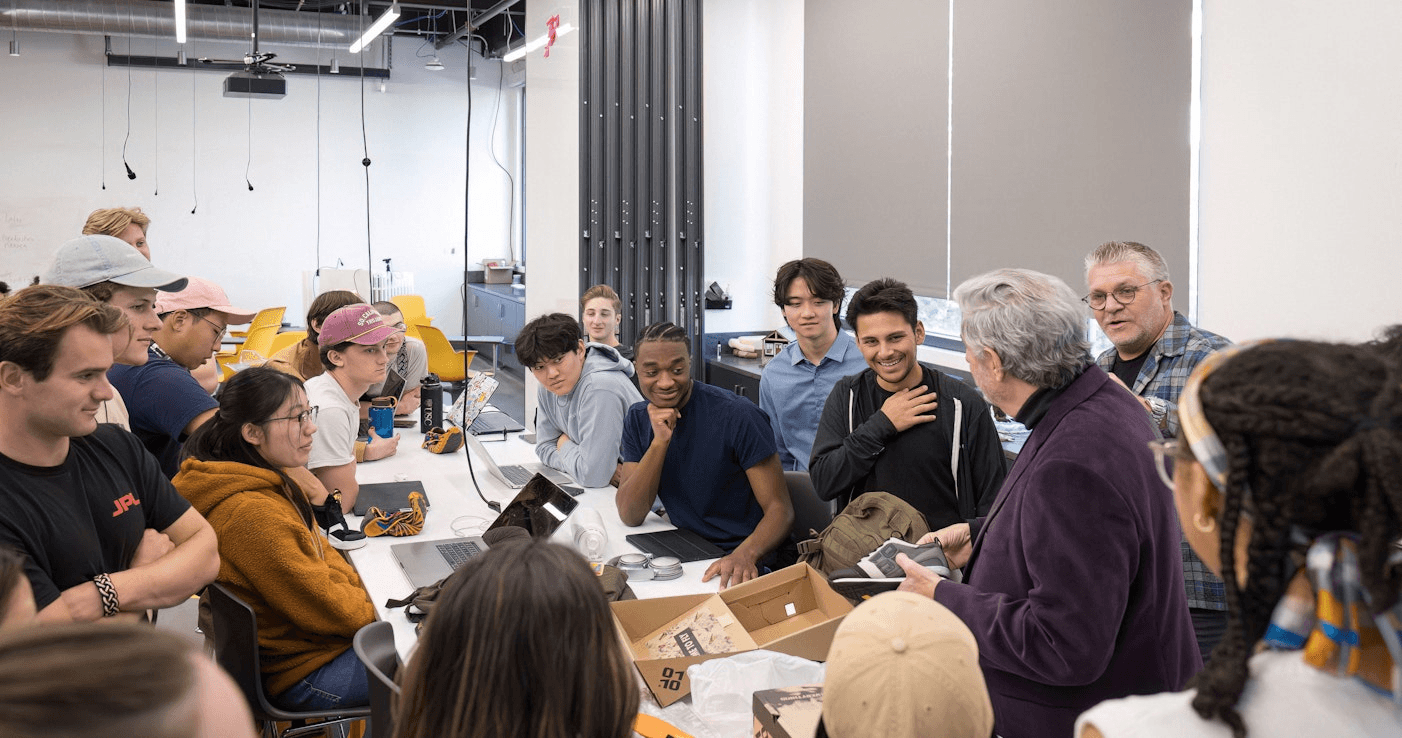
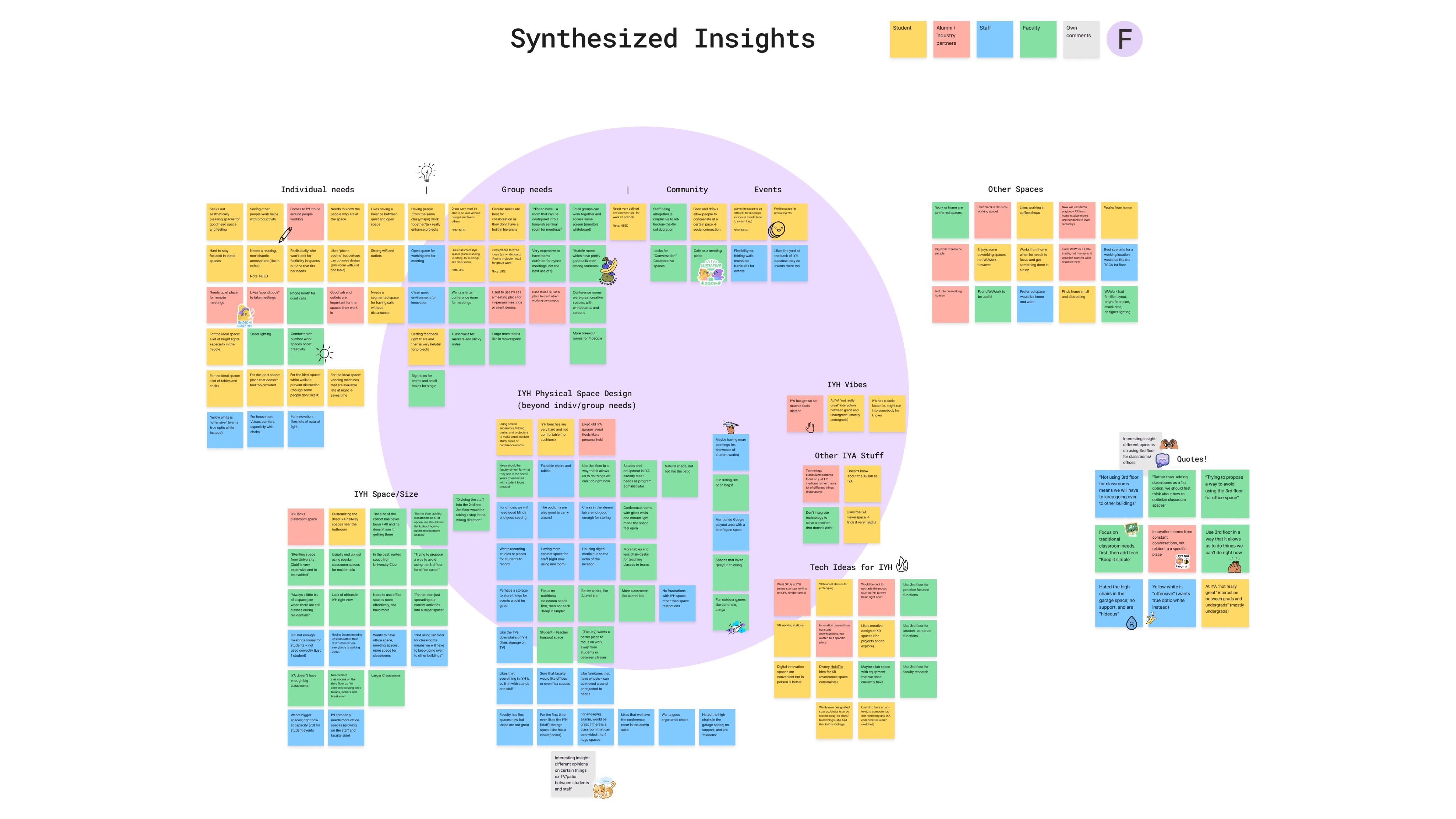
We interviewed students, faculty, staff, and industry collaborators to understand how each group would use the space.
• Students wanted open, unstructured zones for building and collaboration
• Faculty asked for focused areas and meeting-ready environments
• Staff emphasized visibility, access, and storage
• Industry partners wanted to casually drop in and observe student work
These perspectives helped clarify not only what the space should do, but how it should feel for each user group.
We interviewed students, faculty, staff, and industry collaborators to understand how each group would use the space.
• Students wanted open, unstructured zones for building and collaboration
• Faculty asked for focused areas and meeting-ready environments
• Staff emphasized visibility, access, and storage
• Industry partners wanted to casually drop in and observe student work
These perspectives helped clarify not only what the space should do, but how it should feel for each user group.
Built for Collaboration, Designed to Adapt
Built for Collaboration, Designed to Adapt
OUR PRINCIPLES
OUR PRINCIPLES
OUR PRINCIPLES
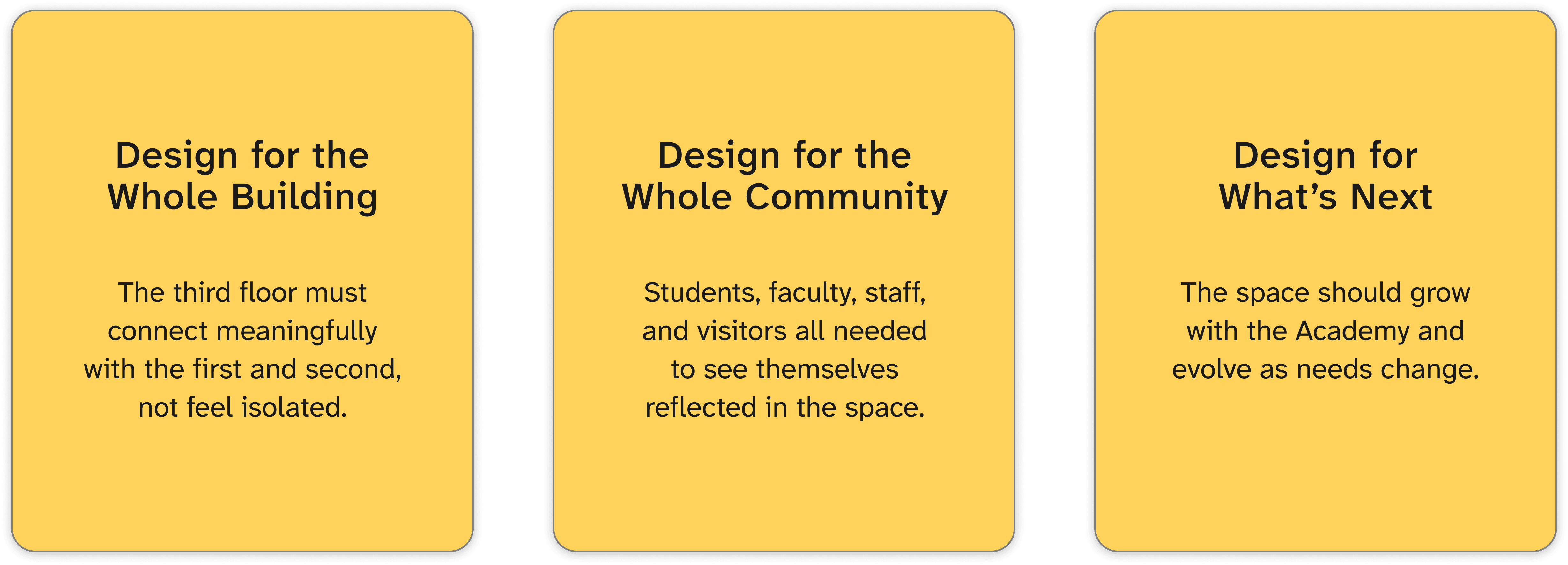
We grounded our design strategy in three core principles:
We grounded our design strategy in three core principles:
We grounded our design strategy in three core principles:
Design for the Whole Building
The third floor must connect meaningfully with the first and second, not feel isolated.
Design for the Whole Community
Students, faculty, staff, and visitors all needed to see themselves reflected in the space.
Design for What’s Next
The space should grow with the Academy and evolve as needs change.
A Flexible Layout for a Multidisciplinary Community
A Flexible Layout for a Multidisciplinary Community
OUR SOLUTION
OUR SOLUTION
OUR SOLUTION
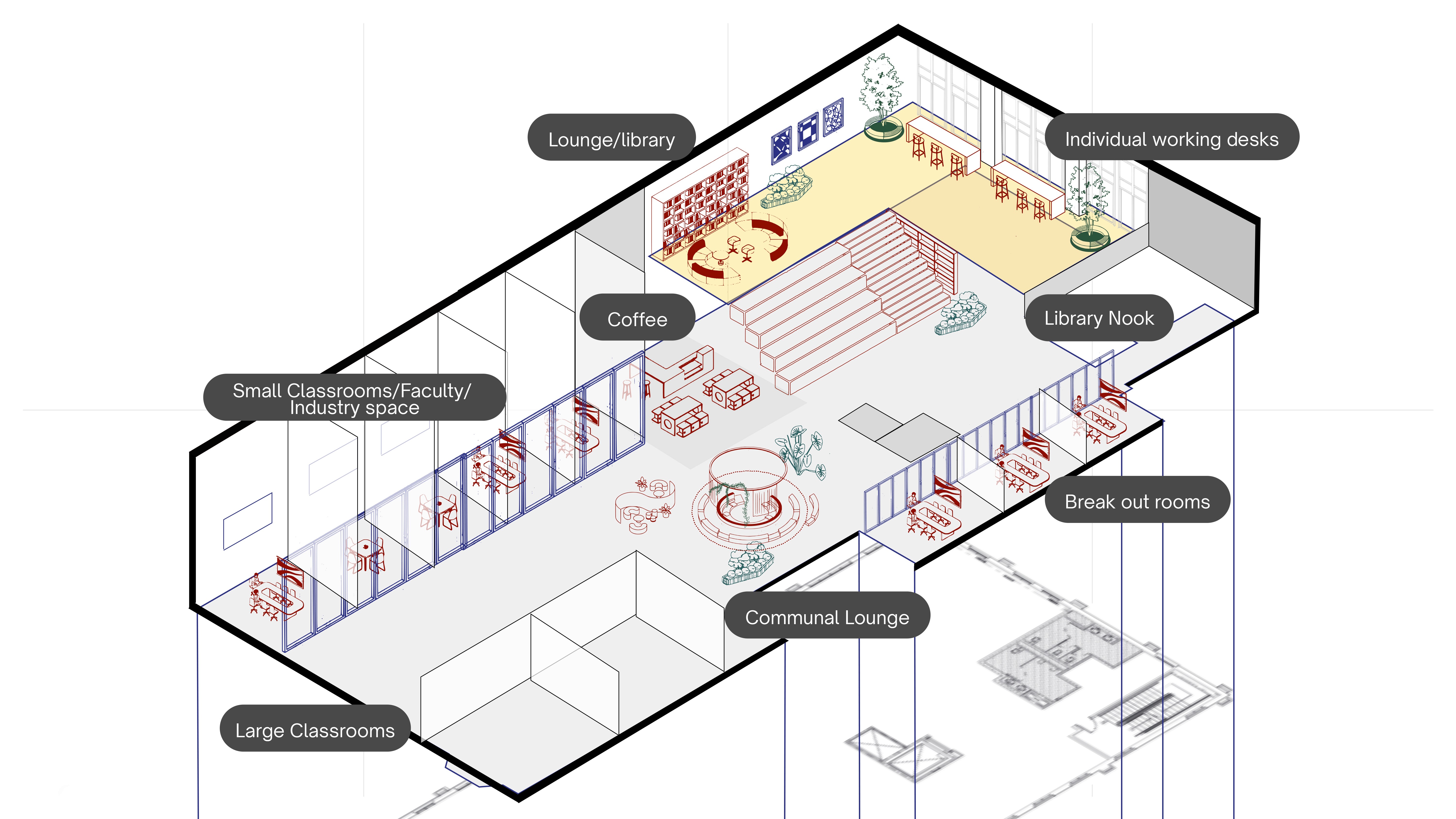
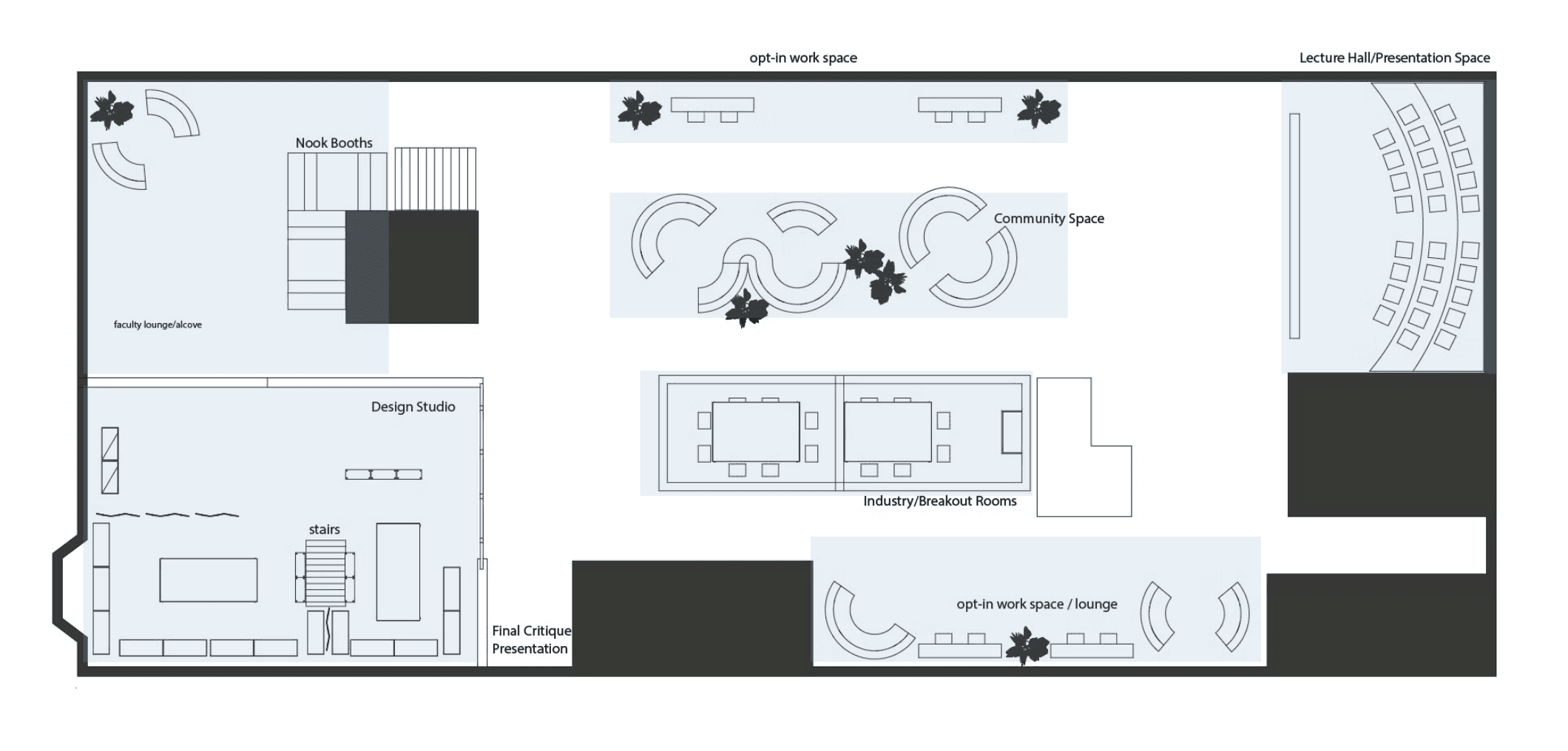
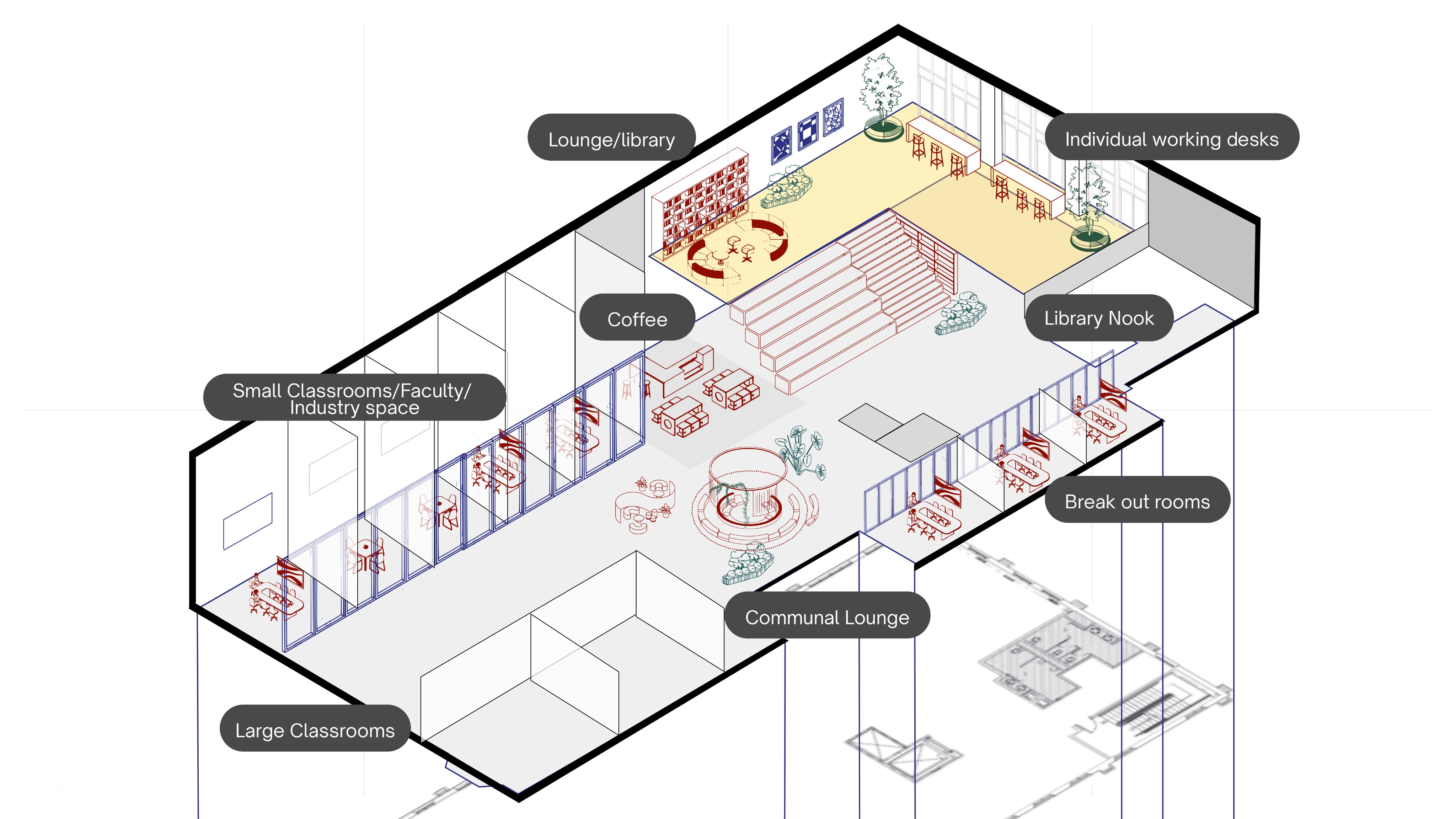
We created a spatial concept based on five design goals:
• Make collaboration easy and informal
• Keep the layout modular and reconfigurable
• Integrate technology mindfully and purposefully
• Support a range of work styles and team sizes
• Reflect IYA’s identity through materials, lighting, and color
The layout avoided fixed zones in favor of zones that could shift over time or even throughout the day.
We created a spatial concept based on five design goals:
• Make collaboration easy and informal
• Keep the layout modular and reconfigurable
• Integrate technology mindfully and purposefully
• Support a range of work styles and team sizes
• Reflect IYA’s identity through materials, lighting, and color
The layout avoided fixed zones in favor of zones that could shift over time or even throughout the day.
We created a spatial concept based on five design goals:
• Make collaboration easy and informal
• Keep the layout modular and reconfigurable
• Integrate technology mindfully and purposefully
• Support a range of work styles and team sizes
• Reflect IYA’s identity through materials, lighting, and color
The layout avoided fixed zones in favor of zones that could shift over time or even throughout the day.
From Conceptual Layouts to Behavioral Flows
From Conceptual Layouts to Behavioral Flows
EARLY EXPLORATIONS
EARLY EXPLORATIONS
EARLY EXPLORATIONS
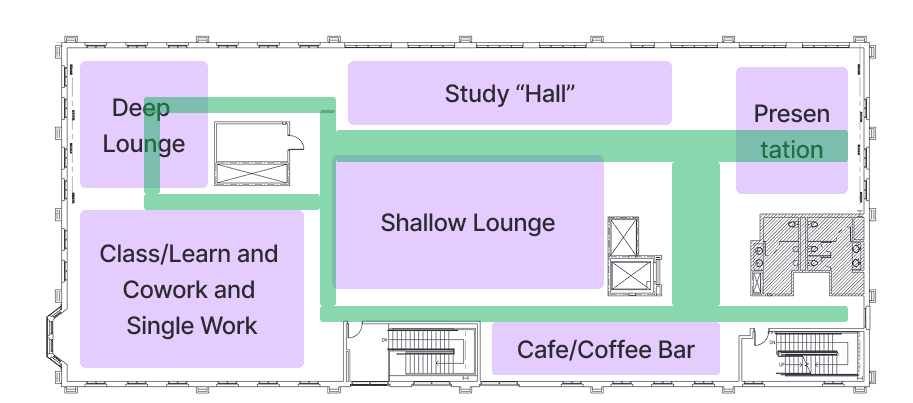
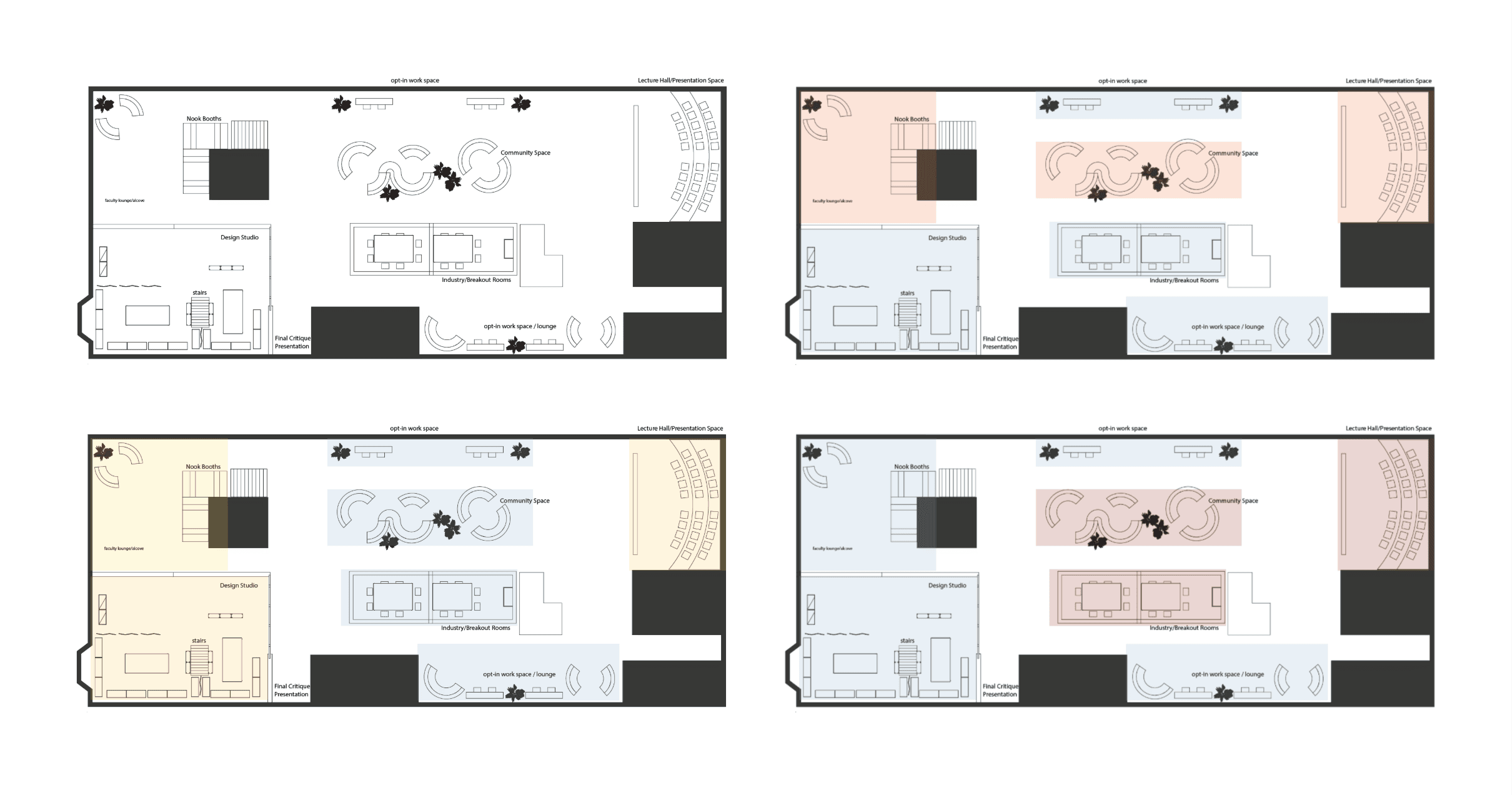
We started with a series of “shapes study” explorations, testing how people would move through the space and where natural points of connection might occur.
Each layout was tested against specific user journeys and behavior patterns. This helped us balance openness with functional separation.
We started with a series of “shapes study” explorations, testing how people would move through the space and where natural points of connection might occur.
Each layout was tested against specific user journeys and behavior patterns. This helped us balance openness with functional separation.
We started with a series of “shapes study” explorations, testing how people would move through the space and where natural points of connection might occur.
Each layout was tested against specific user journeys and behavior patterns. This helped us balance openness with functional separation.
Making the Vision Realistic and Actionable
Making the Vision Realistic and Actionable
ITERATION AND FEEDBACK
ITERATION AND FEEDBACK
ITERATION AND FEEDBACK
As we shared early renderings, we received key questions from stakeholders. Where does personal storage go? How will sound be managed? What happens when multiple groups need the space at once?
We responded with more detailed plan views, annotated diagrams, and journey maps that walked through real-world scenarios. This helped bring clarity to how the space would actually function.
As we shared early renderings, we received key questions from stakeholders. Where does personal storage go? How will sound be managed? What happens when multiple groups need the space at once?
We responded with more detailed plan views, annotated diagrams, and journey maps that walked through real-world scenarios. This helped bring clarity to how the space would actually function.
As we shared early renderings, we received key questions from stakeholders. Where does personal storage go? How will sound be managed? What happens when multiple groups need the space at once?
We responded with more detailed plan views, annotated diagrams, and journey maps that walked through real-world scenarios. This helped bring clarity to how the space would actually function.
A Space Alone Isn’t Enough Without Activation
A Space Alone Isn’t Enough Without Activation
PROGRAMMING IDEAS
PROGRAMMING IDEAS
PROGRAMMING IDEAS
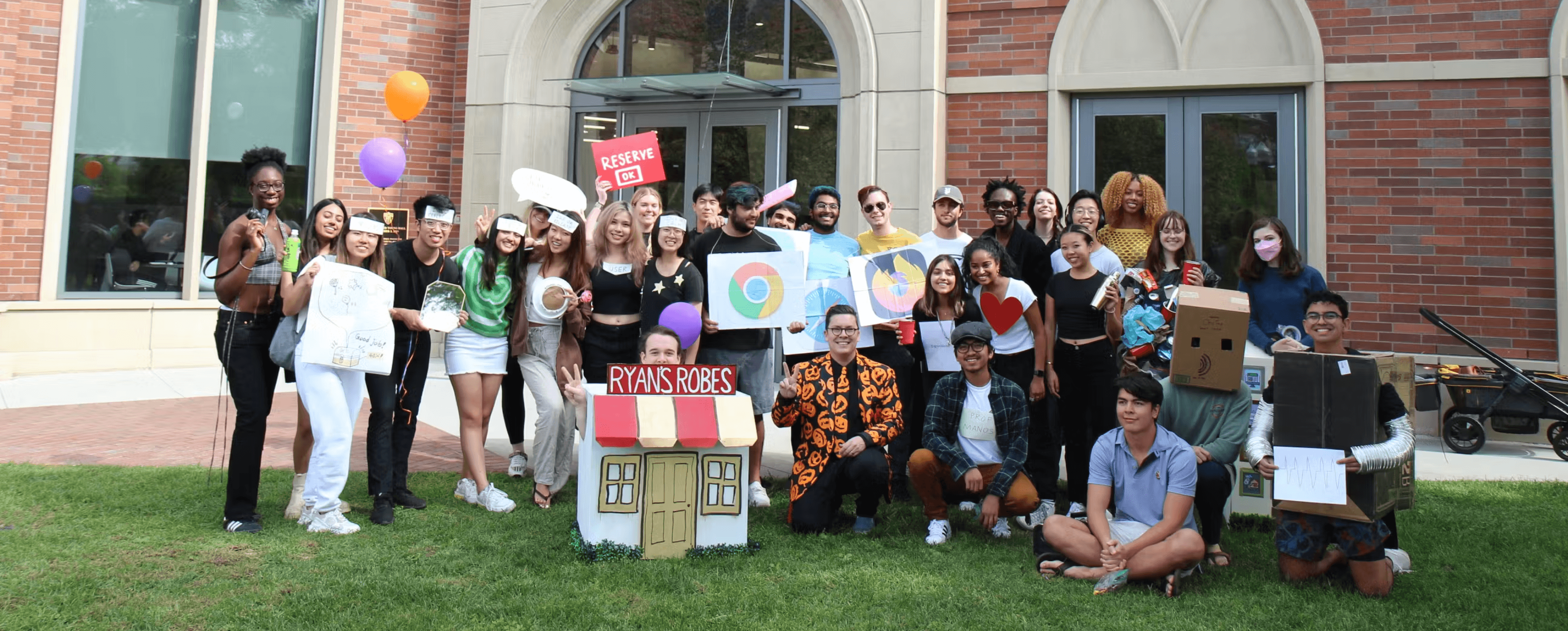
To make sure the space wouldn’t just look good but actually be used meaningfully, we proposed a set of programming ideas:
• Lunch at IYH to create informal community time
• Open Studio blocks for shared making and co-working
• #IYABuildinPublic sessions for students to share in-progress work and gather feedback
These concepts helped bridge the gap between design intent and lived experience.
To make sure the space wouldn’t just look good but actually be used meaningfully, we proposed a set of programming ideas:
• Lunch at IYH to create informal community time
• Open Studio blocks for shared making and co-working
• #IYABuildinPublic sessions for students to share in-progress work and gather feedback
These concepts helped bridge the gap between design intent and lived experience.
To make sure the space wouldn’t just look good but actually be used meaningfully, we proposed a set of programming ideas:
• Lunch at IYH to create informal community time
• Open Studio blocks for shared making and co-working
• #IYABuildinPublic sessions for students to share in-progress work and gather feedback
These concepts helped bridge the gap between design intent and lived experience.
From Strategy to Implementation
From Strategy to Implementation
OUTCOMES
OUTCOMES
OUTCOMES
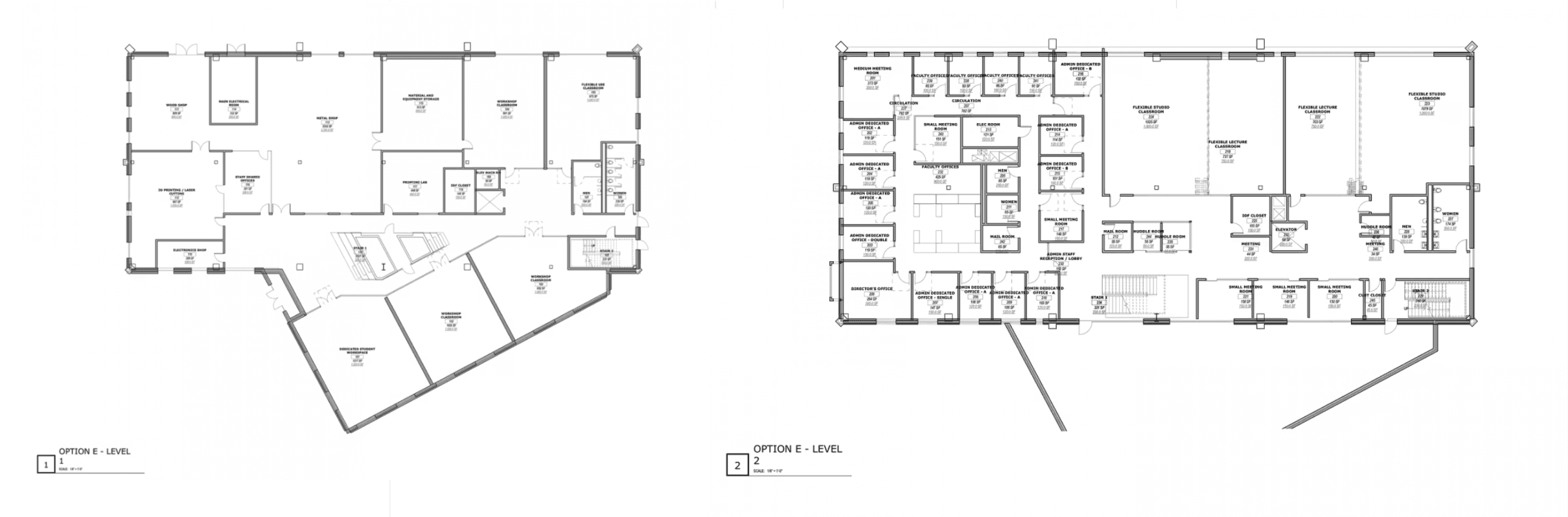
Our work is now being used to guide the third floor's buildout. The interviews, market research, design principles, and floor plans are serving as the foundation for continued development.
It also influenced how the other floors are being reimagined, helping position the building as a truly unified ecosystem.
Our work is now being used to guide the third floor's buildout. The interviews, market research, design principles, and floor plans are serving as the foundation for continued development.
It also influenced how the other floors are being reimagined, helping position the building as a truly unified ecosystem.
Our work is now being used to guide the third floor's buildout. The interviews, market research, design principles, and floor plans are serving as the foundation for continued development.
It also influenced how the other floors are being reimagined, helping position the building as a truly unified ecosystem.
Designing from Within a Community
Designing from Within a Community
REFLECTION
REFLECTION
REFLECTION
As a student designing for a building and community I interact with every day, I had to stay aware of my own assumptions. It was important to listen, not just represent. I approached interviews and feedback with curiosity and stayed open to ideas that challenged my initial perspective.
This project taught me how to bring together different priorities into a cohesive vision that felt both flexible and practical. I learned how to navigate ambiguity, advocate for decisions rooted in research, and design solutions that reflected more than just my own experience.
More than anything, it solidified my understanding of how space can shape the way people feel, work, and connect.
As a student designing for a building and community I interact with every day, I had to stay aware of my own assumptions. It was important to listen, not just represent. I approached interviews and feedback with curiosity and stayed open to ideas that challenged my initial perspective.
This project taught me how to bring together different priorities into a cohesive vision that felt both flexible and practical. I learned how to navigate ambiguity, advocate for decisions rooted in research, and design solutions that reflected more than just my own experience.
More than anything, it solidified my understanding of how space can shape the way people feel, work, and connect.
As a student designing for a building and community I interact with every day, I had to stay aware of my own assumptions. It was important to listen, not just represent. I approached interviews and feedback with curiosity and stayed open to ideas that challenged my initial perspective.
This project taught me how to bring together different priorities into a cohesive vision that felt both flexible and practical. I learned how to navigate ambiguity, advocate for decisions rooted in research, and design solutions that reflected more than just my own experience.
More than anything, it solidified my understanding of how space can shape the way people feel, work, and connect.