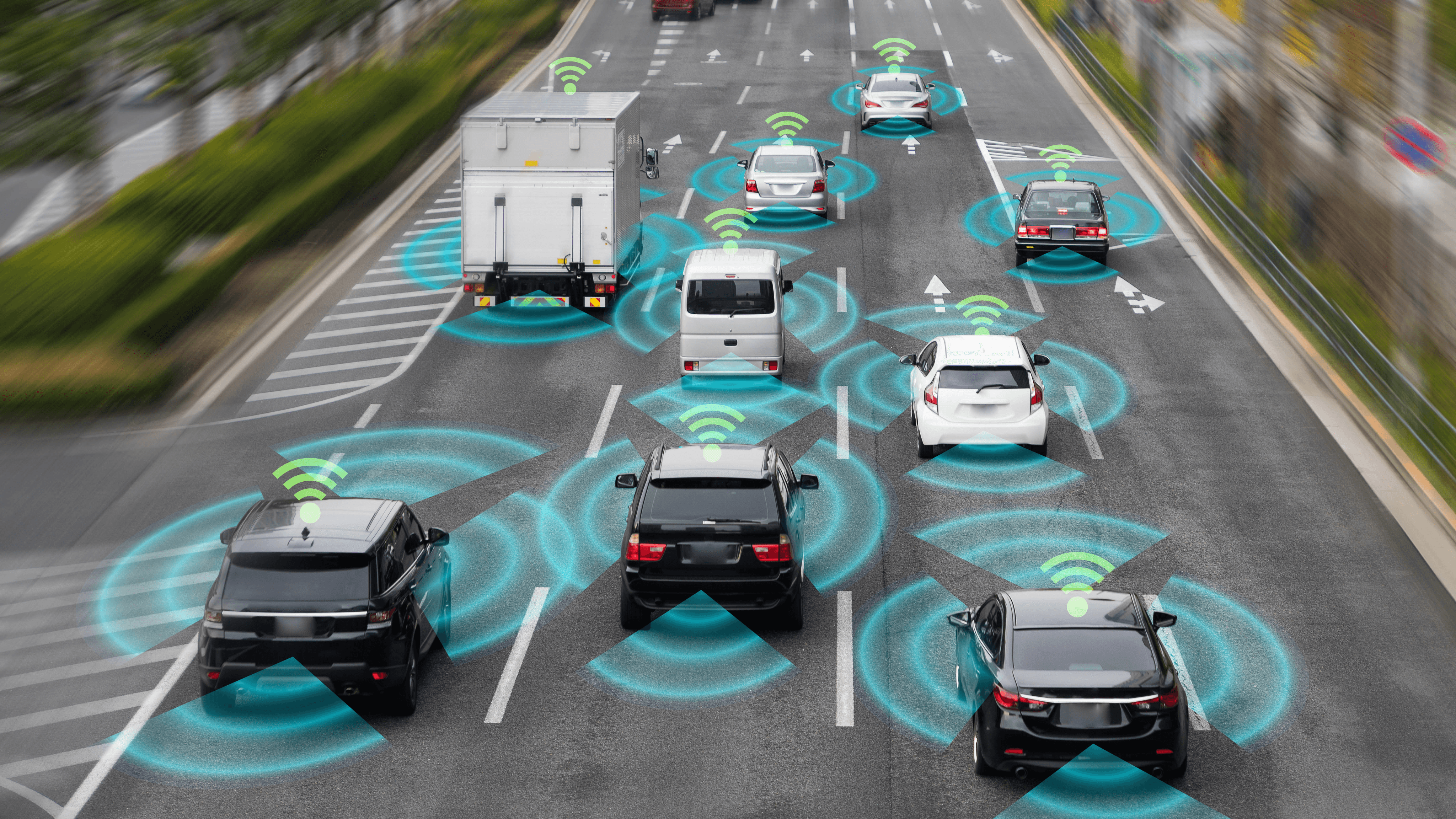
As autonomous driving becomes the default, performance and technical capabilities will no longer be key differentiators. Cars will be judged not just by how they drive but by how they feel.
We set out to explore a provocative question:
What happens when the road no longer demands your attention?
What will passengers crave in that time and space? Our answer: deep emotional resonance.
As autonomous driving becomes the default, performance and technical capabilities will no longer be key differentiators. Cars will be judged not just by how they drive but by how they feel.
We set out to explore a provocative question:
What happens when the road no longer demands your attention?
What will passengers crave in that time and space? Our answer: deep emotional resonance.
In a World of Smart Cars, What Will Make People Care?
In a World of Smart Cars, What Will Make People Care?
THE PROBLEM
Today, luxury cars isolate and entertain. Utility vehicles optimize. But most cars are not designed to support the emotional wellbeing of the people inside.
Prompted by Honda to imagine the future of transportation through the lens of identity and lifestyle, we aimed to reimagine the car as a transitional space, a place that doesn’t just transport users from point A to point B, but supports their journey by adapting to their needs.
Today, luxury cars isolate and entertain. Utility vehicles optimize. But most cars are not designed to support the emotional wellbeing of the people inside.
Prompted by Honda to imagine the future of transportation through the lens of identity and lifestyle, we aimed to reimagine the car as a transitional space, a place that doesn’t just transport users from point A to point B, but supports their journey by adapting to their needs.
Redefining the Car as a Responsive Experience
Redefining the Car as a Responsive Experience
THE CHALLENGE
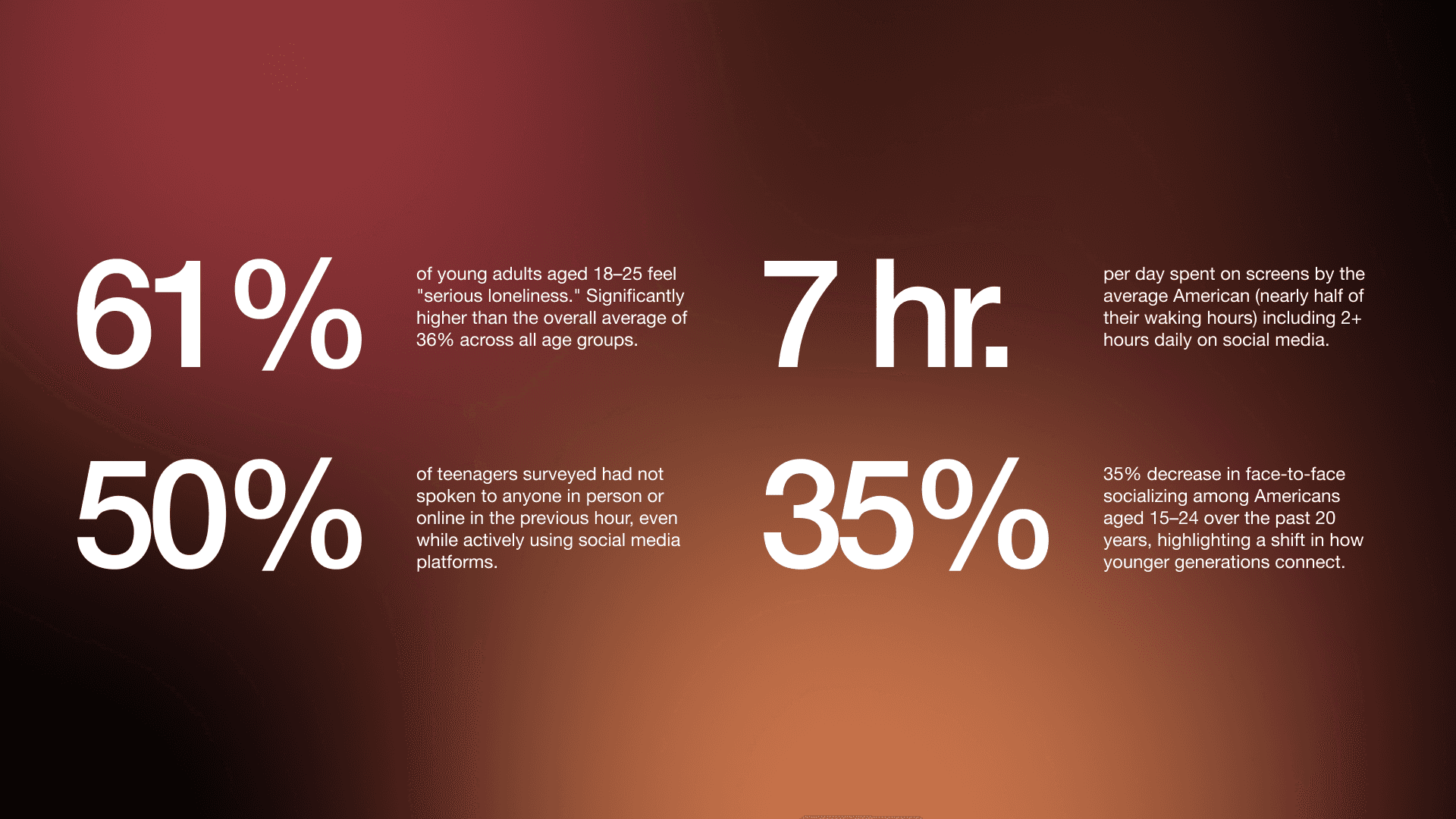
Even in our hyperconnected world, loneliness is rising. With fewer third spaces like cafés, libraries, and public plazas, we’re left with fewer chances to connect in person. And as vehicles become more autonomous, we realized the car itself might become one of the last remaining intimate, shared spaces.
What if the car could become a new kind of third space: one that supports comfort, reflection, and connection?
Even in our hyperconnected world, loneliness is rising. With fewer third spaces like cafés, libraries, and public plazas, we’re left with fewer chances to connect in person. And as vehicles become more autonomous, we realized the car itself might become one of the last remaining intimate, shared spaces.
What if the car could become a new kind of third space: one that supports comfort, reflection, and connection?
More Connected, Yet More Alone
More Connected, Yet More Alone
OUR INSIGHT
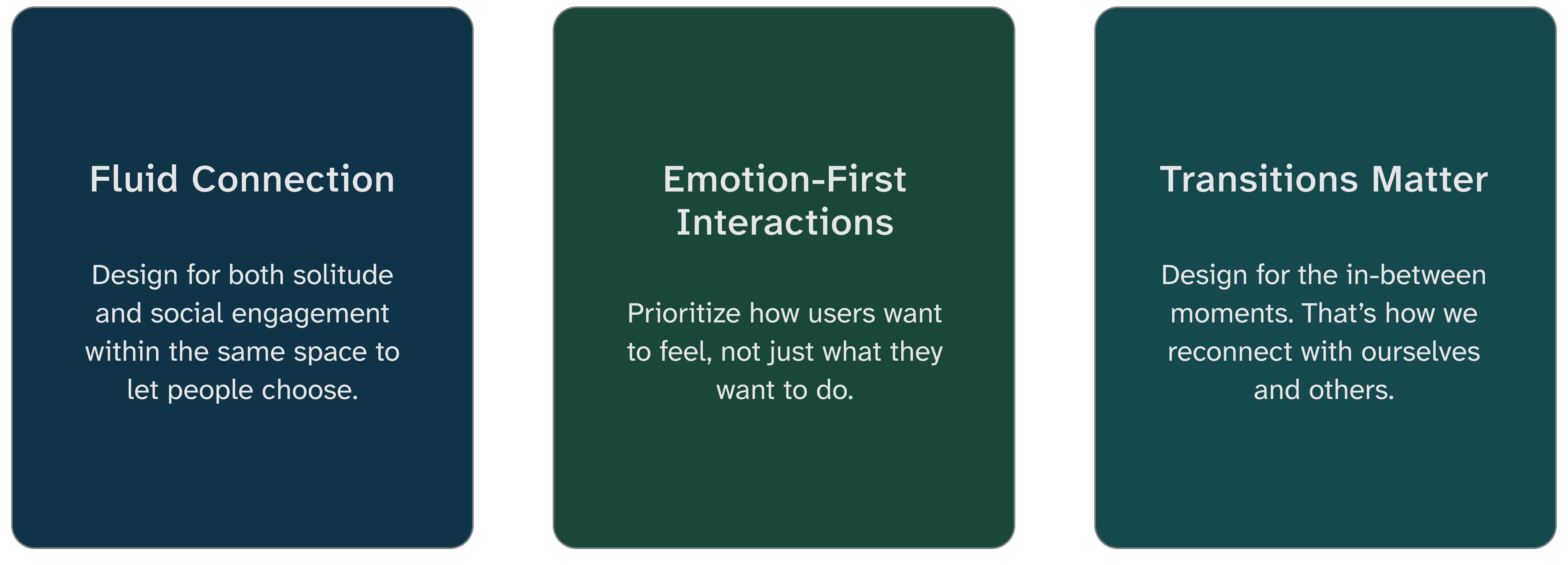
Fluid Connection
Design for both solitude and social engagement within the same space to let people choose.
Emotion-First
Interactions
Prioritize how users want to feel, not just what they want to do.
Transitions Matter
Design for the in-between moments. That’s how we reconnect with ourselves and others.
Designing for Emotional Adaptability
Designing for Emotional Adaptability
OUR PRINCIPLES
We grounded our solution in three guiding principles, inspired by research in positive psychology and emerging trends in lifestyle mobility:
We grounded our solution in three guiding principles, inspired by research in positive psychology and emerging trends in lifestyle mobility:
Mosaic: Connecting Individual Stories Into One Experience
Mosaic: Connecting Individual Stories Into One Experience
OUR SOLUTION
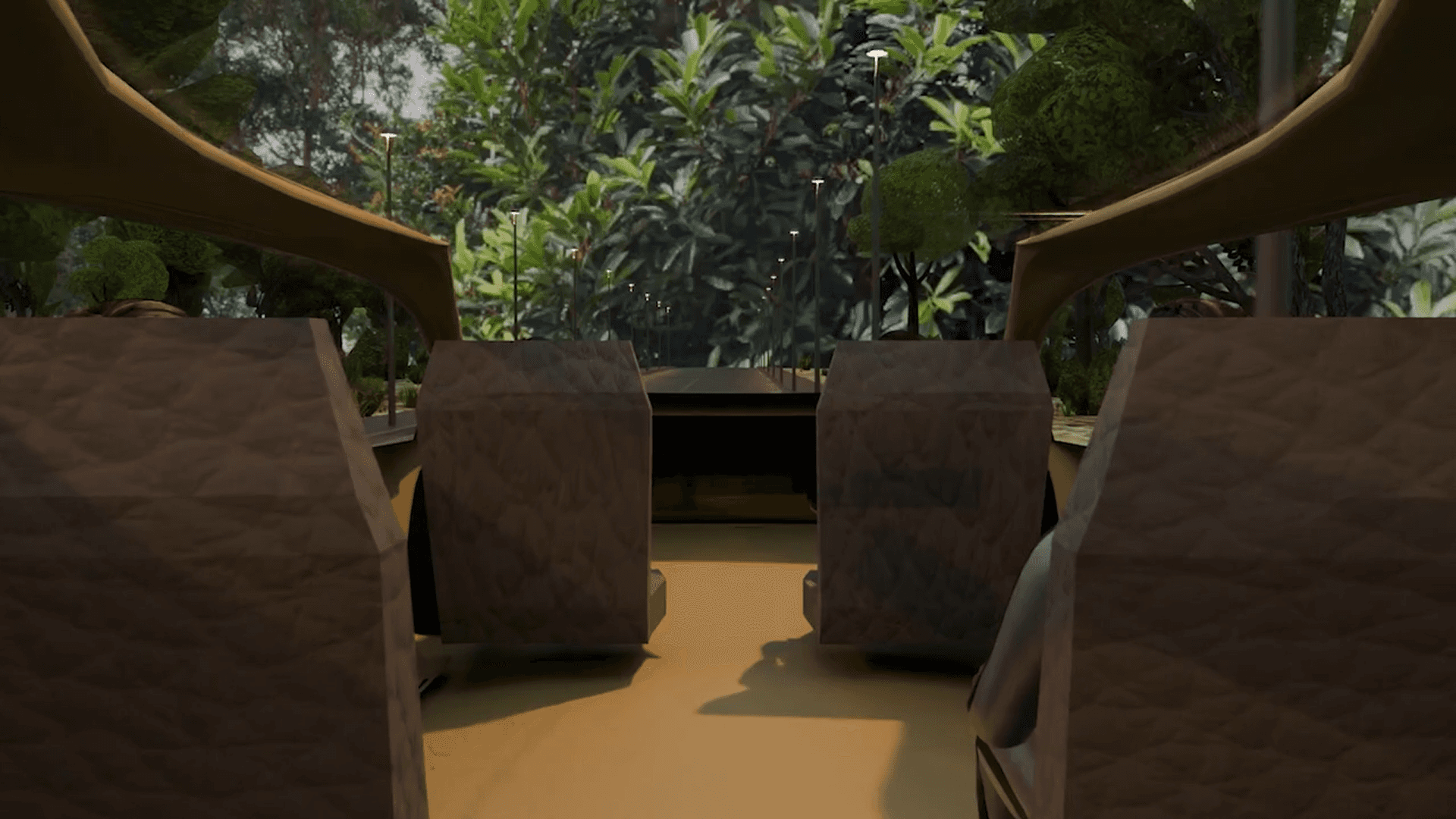
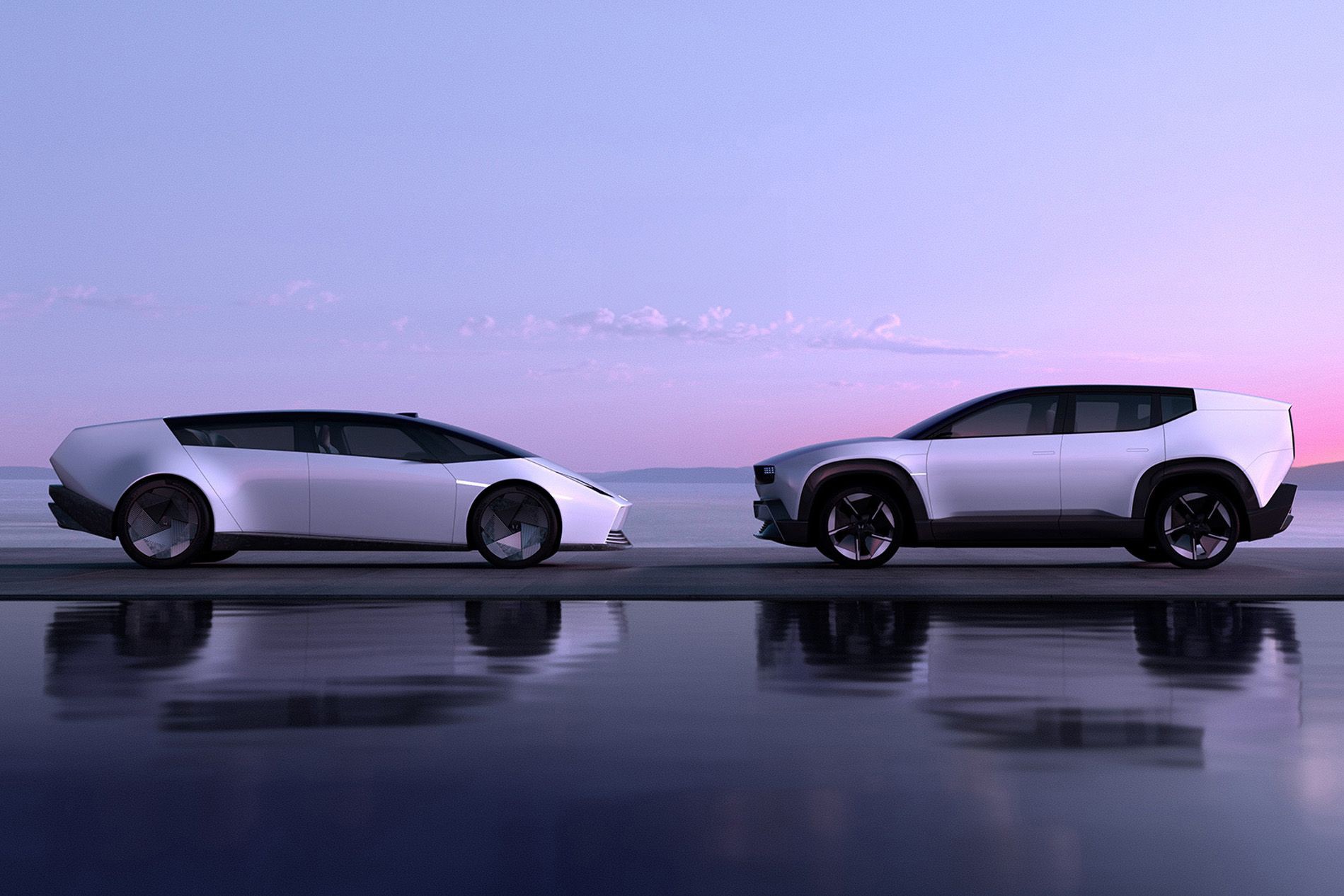
We created Mosaic: a concept car that dynamically supports real-time emotional adaptability. It reimagines the in-car experience as one that balances privacy and presence, focus and rest, autonomy and community.
Like the artwork it's named after, Mosaic brings together distinct individuals’ needs and personalities into a seamless, cohesive whole in order to craft a shared space where everyone can feel seen.
We created Mosaic: a concept car that dynamically supports real-time emotional adaptability. It reimagines the in-car experience as one that balances privacy and presence, focus and rest, autonomy and community.
Like the artwork it's named after, Mosaic brings together distinct individuals’ needs and personalities into a seamless, cohesive whole in order to craft a shared space where everyone can feel seen.
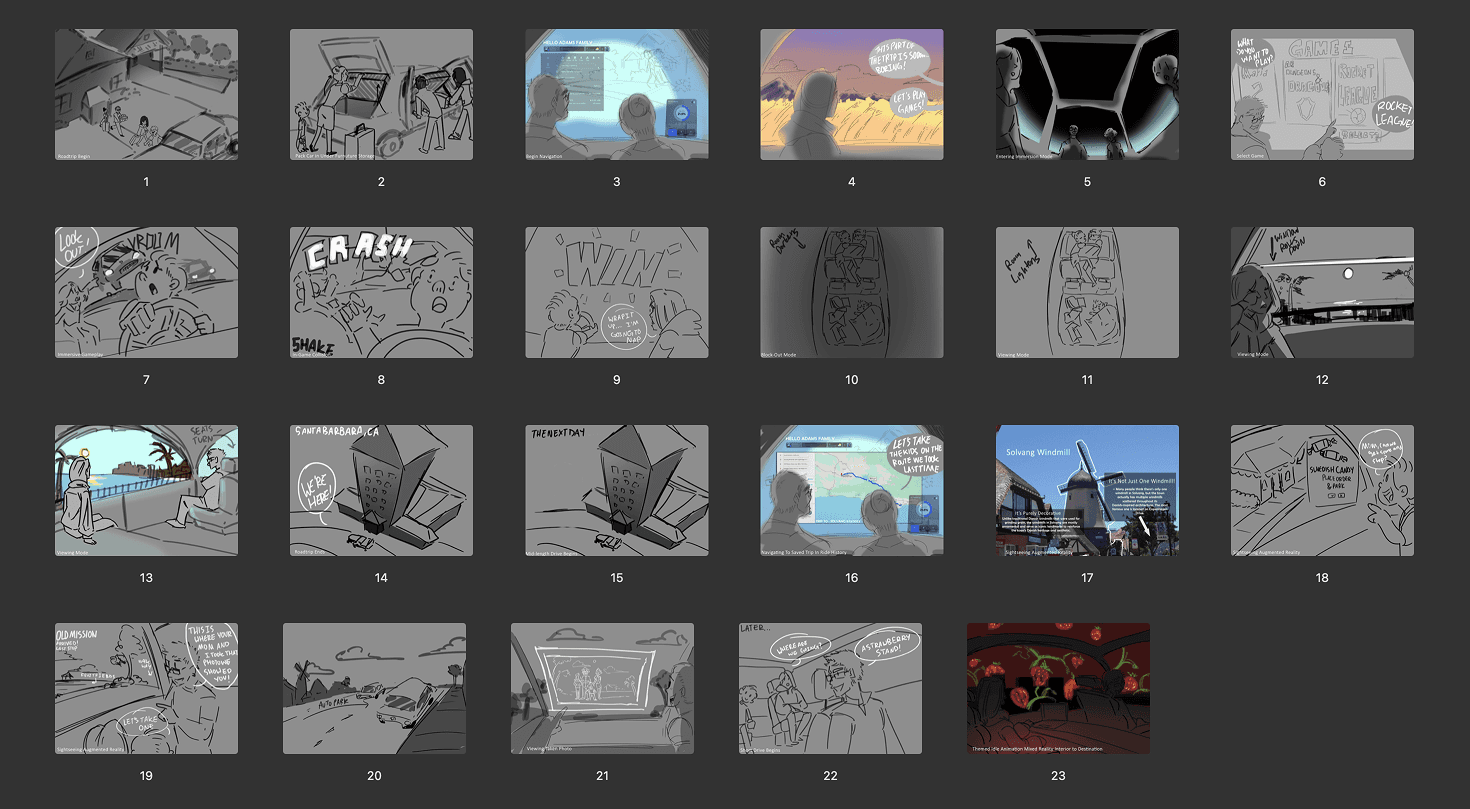
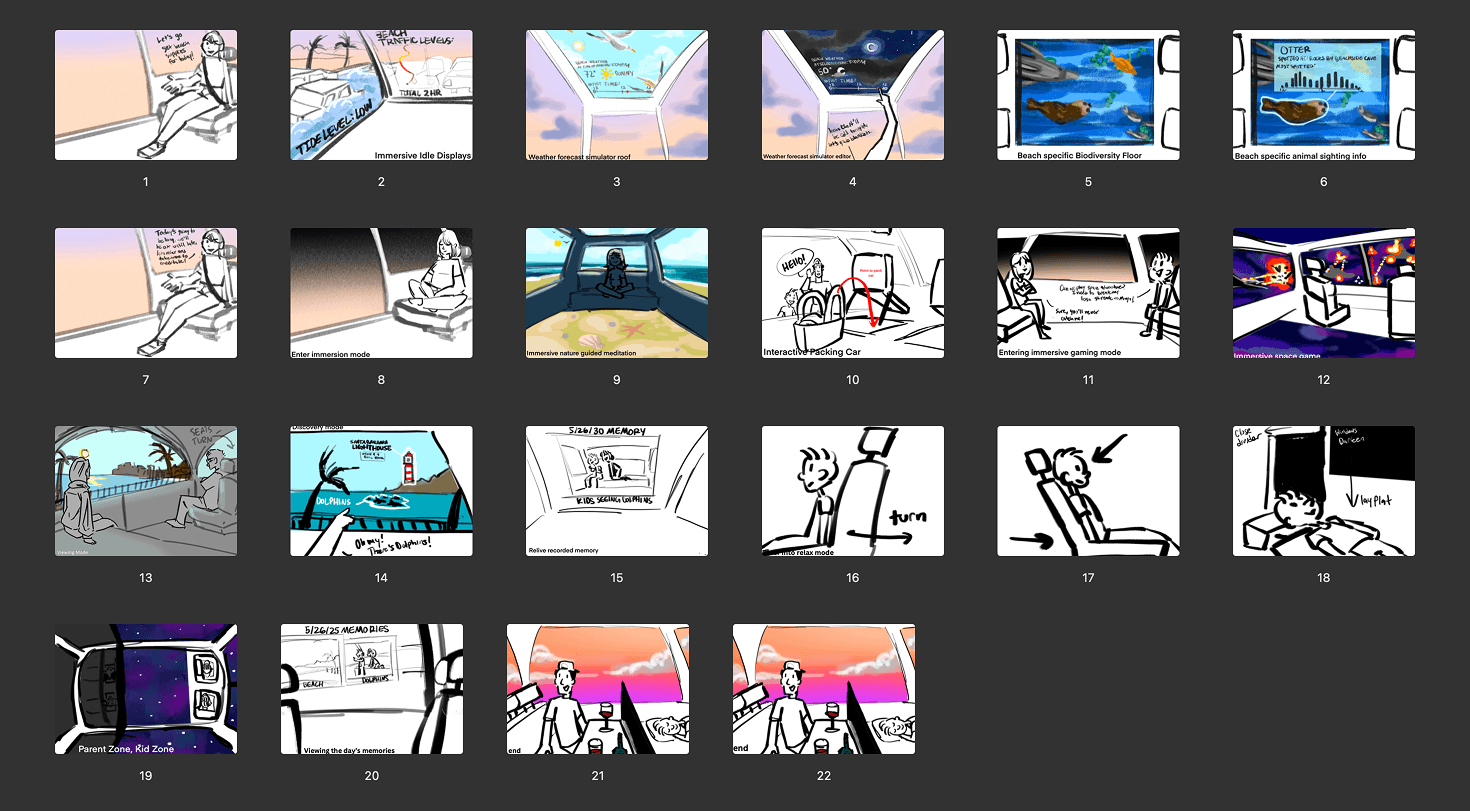
We began by imagining real-life future scenarios: road trips, long commutes, post-work decompression, even moments of disagreement.
We asked ourselves questions to begin mapping out an initial user journey:
• What kinds of emotional states emerge in the car?
• How might the interior adapt to tension, boredom, or overstimulation?
• Could features proactively promote harmony, not just avoid friction?
These explorations not only helped us map out our initial use cases but shaped fundamental aspects of the concept vision that remained in our final direction.
We began by imagining real-life future scenarios: road trips, long commutes, post-work decompression, even moments of disagreement.
We asked ourselves questions to begin mapping out an initial user journey:
• What kinds of emotional states emerge in the car?
• How might the interior adapt to tension, boredom, or overstimulation?
• Could features proactively promote harmony, not just avoid friction?
These explorations not only helped us map out our initial use cases but shaped fundamental aspects of the concept vision that remained in our final direction.
Designing for Future Families and Tension Points
Designing for Future Families and Tension Points
EARLY EXPLORATIONS
Honda Asked Us to Bring Ourselves Into the Experience
Honda Asked Us to Bring Ourselves Into the Experience
INCORPORATING FEEDBACK
Our initial concepts spanned speculative tech, playful features, and immersive environments. When we shared our early prototype, Honda’s design mentors gave us three powerful questions:
• How does this reflect your personal perspective?
• How does this align with Honda’s brand?
• How might you better balance connection and solitude?
This feedback reframed our perspective. We realized the solution didn’t need to be flashier, but it did need to be truer to who we are and what Honda’s brand stands for. That shift re-centered our focus on human needs over novelty, leading to a more grounded and emotionally aware design.
Our initial concepts spanned speculative tech, playful features, and immersive environments. When we shared our early prototype, Honda’s design mentors gave us three powerful questions:
• How does this reflect your personal perspective?
• How does this align with Honda’s brand?
• How might you better balance connection and solitude?
This feedback reframed our perspective. We realized the solution didn’t need to be flashier, but it did need to be truer to who we are and what Honda’s brand stands for. That shift re-centered our focus on human needs over novelty, leading to a more grounded and emotionally aware design.
Infusing Ourselves
Infusing Ourselves
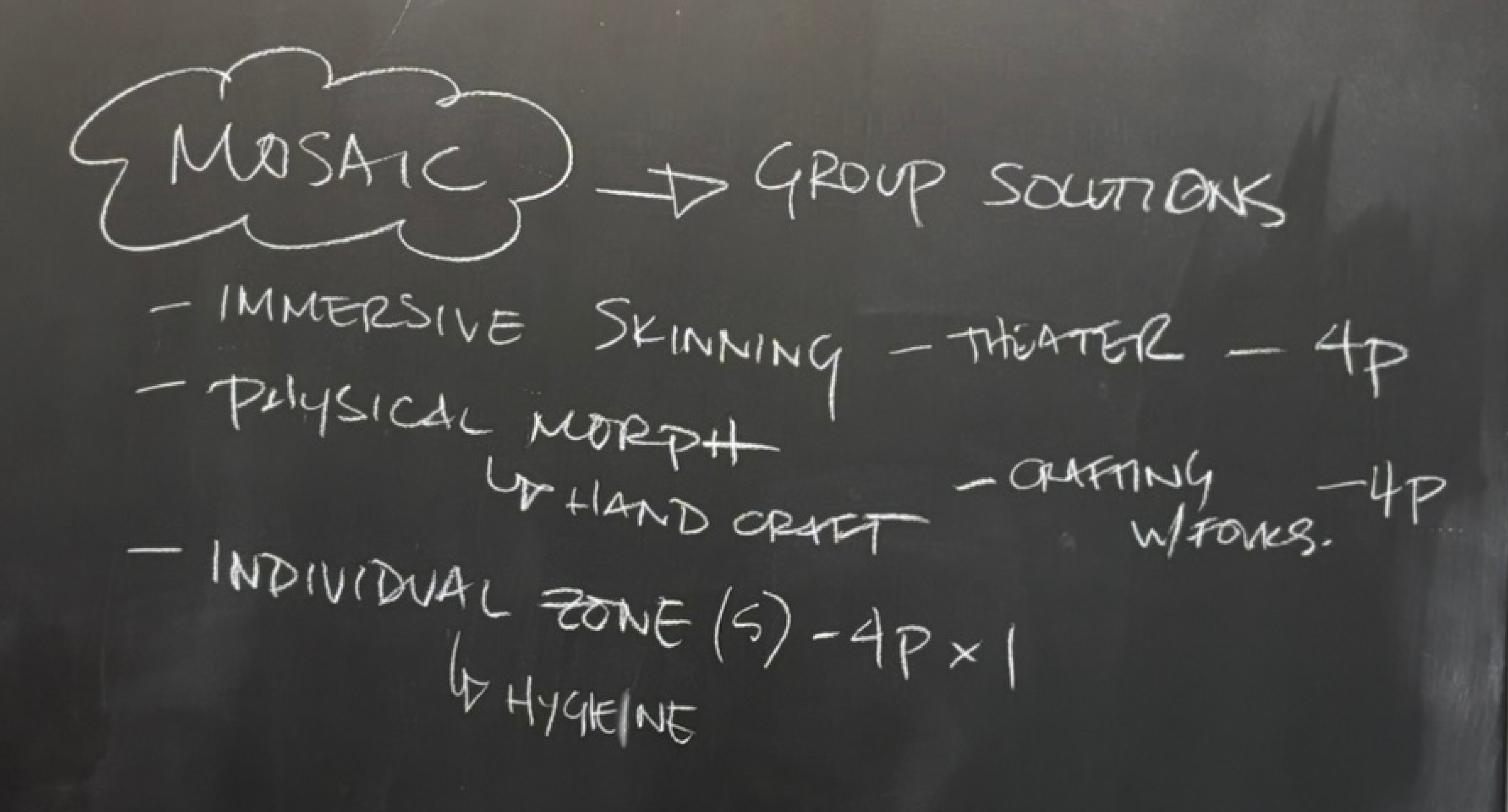
We leaned into personal use cases. From alone time after work to moments of connection with friends, we designed not for theoretical users, but for ourselves, and it made the experience more real.
We leaned into personal use cases. From alone time after work to moments of connection with friends, we designed not for theoretical users, but for ourselves, and it made the experience more real.
We leaned into personal use cases. From alone time after work to moments of connection with friends, we designed not for theoretical users, but for ourselves, and it made the experience more real.
Grounding in Brand
Grounding in Brand
We studied Honda’s brand values and realized they deeply aligned with our emotional goals and gave the concept brand-level legitimacy:
• Respect for the Individual
• The Three Joys
• The Power of Dreams
We studied Honda’s brand values and realized they deeply aligned with our emotional goals and gave the concept brand-level legitimacy:
• Respect for the Individual
• The Three Joys
• The Power of Dreams
We studied Honda’s brand values and realized they deeply aligned with our emotional goals and gave the concept brand-level legitimacy:
• Respect for the Individual
• The Three Joys
• The Power of Dreams
Refining Our Original Ideas
Refining Our Original Ideas
Rather than start over, we elevated. We kept our core concepts, but gave them sharper framing, clearer use cases, and a deeper sense of purpose while still preserving their intrigue and playfulness.
Rather than start over, we elevated. We kept our core concepts, but gave them sharper framing, clearer use cases, and a deeper sense of purpose while still preserving their intrigue and playfulness.
Rather than start over, we elevated. We kept our core concepts, but gave them sharper framing, clearer use cases, and a deeper sense of purpose while still preserving their intrigue and playfulness.
Personal, Branded, and Balanced
Personal, Branded, and Balanced
DESIGN DECISIONS
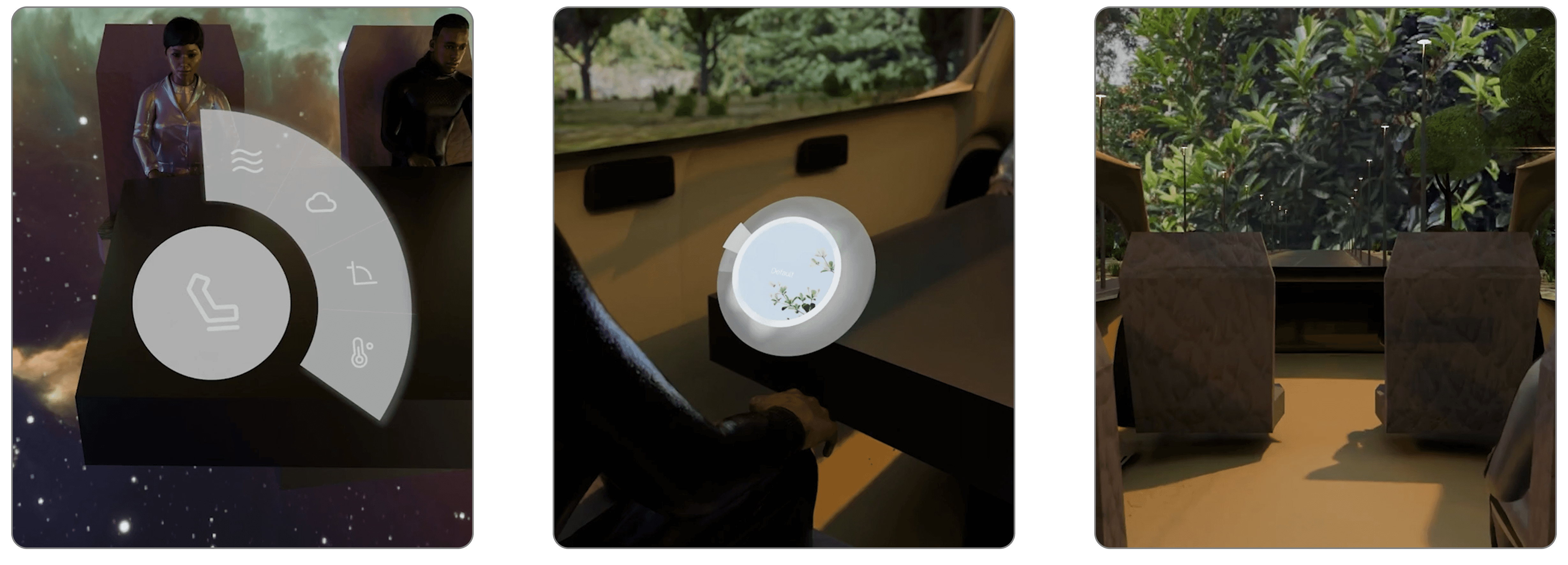
A Toolkit for Human-Centered Flexibility
A Toolkit for Human-Centered Flexibility
KEY FEATURES
3. Morphing Communal Interior
3. Morphing Communal Interior
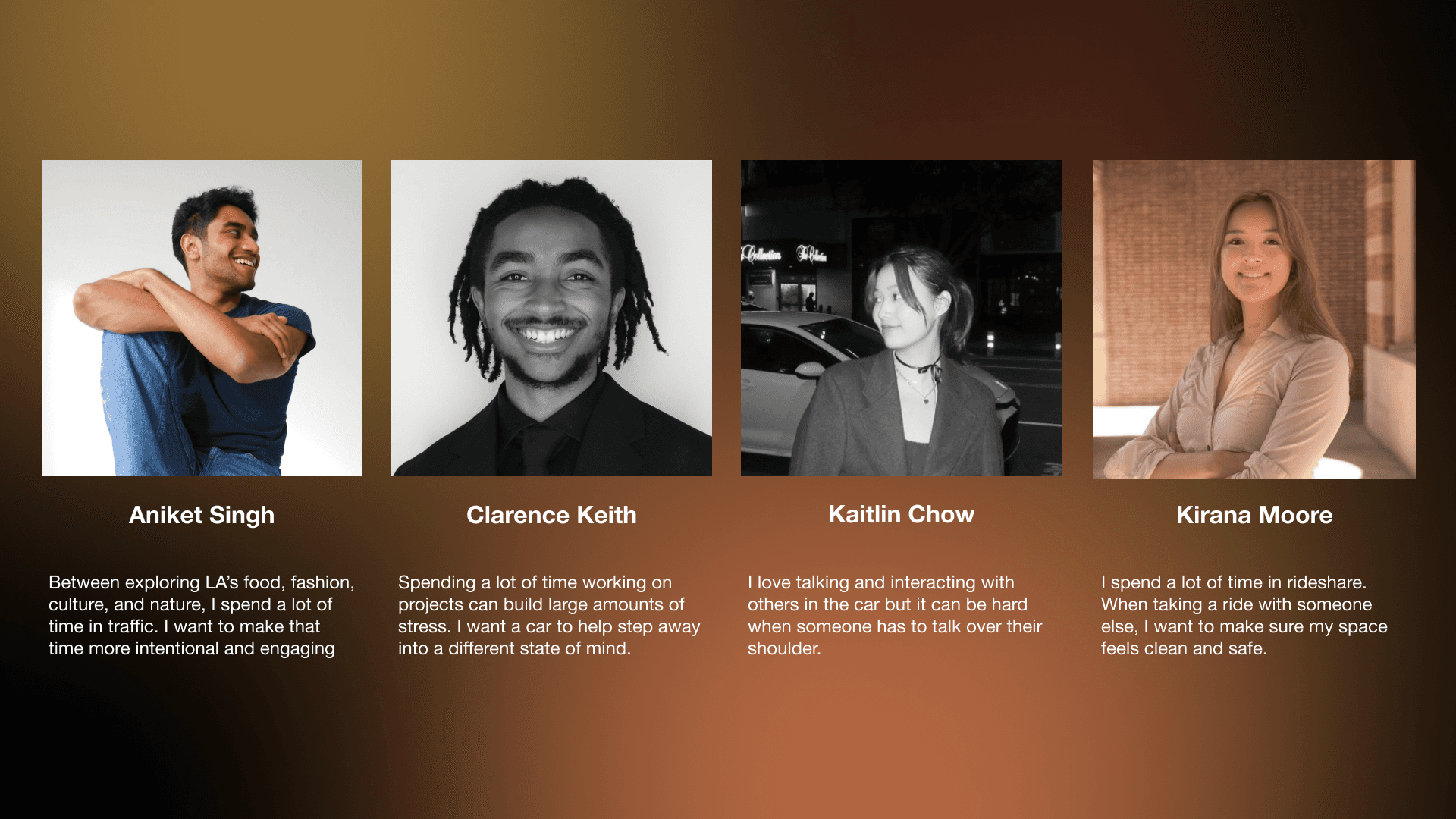
Reconfigurable seating and a pop-up analog table invite genuine interaction. Whether for brainstorming, board games, or just facing each other, the interior adapts in real time to social context.
Reconfigurable seating and a pop-up analog table invite genuine interaction. Whether for brainstorming, board games, or just facing each other, the interior adapts in real time to social context.
Reconfigurable seating and a pop-up analog table invite genuine interaction. Whether for brainstorming, board games, or just facing each other, the interior adapts in real time to social context.
2. Immersive Environmental Skinning
2. Immersive Environmental Skinning
Full-car projection mapping transforms the environment from meditative nature scenes to collaborative atmospheres. Unlike isolating VR headsets, this feature creates shared emotional landscapes.
Full-car projection mapping transforms the environment from meditative nature scenes to collaborative atmospheres. Unlike isolating VR headsets, this feature creates shared emotional landscapes.
Full-car projection mapping transforms the environment from meditative nature scenes to collaborative atmospheres. Unlike isolating VR headsets, this feature creates shared emotional landscapes.
1. Individual Zoning System
1. Individual Zoning System
Directional sound, airflow, and ambient lighting allow riders to create personal “zones” without physical dividers. Ideal for private calls, solo reflection, or short resets without cutting off from the group.
Directional sound, airflow, and ambient lighting allow riders to create personal “zones” without physical dividers. Ideal for private calls, solo reflection, or short resets without cutting off from the group.
Directional sound, airflow, and ambient lighting allow riders to create personal “zones” without physical dividers. Ideal for private calls, solo reflection, or short resets without cutting off from the group.
We presented Mosaic to senior design leaders at American Honda Motor Company.
They appreciated our blend of vision, emotional clarity, and attention to brand. More than anything, they noted how well the final experience reflected both who we are and what Honda stands for.
“Now this feels like the kind of future we’d want to live in.”
We presented Mosaic to senior design leaders at American Honda Motor Company.
They appreciated our blend of vision, emotional clarity, and attention to brand. More than anything, they noted how well the final experience reflected both who we are and what Honda stands for.
“Now this feels like the kind of future we’d want to live in.”
A Shared Dream, Well Received
A Shared Dream, Well Received
FINAL PRESENTATION
Lead with Storytelling
Lead with Storytelling
REFLECTION
If we were to do this again, we’d align the brand narrative and product strategy much earlier in the process so they could inform each other, not just complement.
However, we also celebrated our focus on emotional storytelling throughout our creative process. From ideation sprints to rounds of storyboarding, our team emphasized that storytelling is not a “nice to have” but the core of experience design. Our focus on how the car makes the users feel is what set our proposal apart.
If we were to do this again, we’d align the brand narrative and product strategy much earlier in the process so they could inform each other, not just complement.
However, we also celebrated our focus on emotional storytelling throughout our creative process. From ideation sprints to rounds of storyboarding, our team emphasized that storytelling is not a “nice to have” but the core of experience design. Our focus on how the car makes the users feel is what set our proposal apart.
UX Designer
Design Strategist
ROLE
Speculative Design
Team Leadership
Experience Storytelling
SKILLS
4 months
Los Angeles, CA
TIMELINE
Clarence Keith
Kaitlin Chow
Kirana Moore
TEAM
UX Designer
Design Strategist
ROLE
Speculative Design
Team Leadership
Experience Storytelling
SKILLS
4 months
Los Angeles, CA
TIMELINE
Clarence Keith
Kaitlin Chow
Kirana Moore
TEAM
ROLE
ROLE
ROLE
Design Strategist
UX Designer
Design Strategist
UX Designer
Design Strategist
Speculative Design
Speculative Design
Team Leadership
Team Leadership
Experience Storytelling
Experience Storytelling
SKILLS
SKILLS
SKILLS
Clarence Keith
Kaitlin Chow
Kirana Moore
TEAM
4 months
4 months
Los Angeles, CA
Los Angeles, CA
TIMELINE
TIMELINE
TIMELINE
4 months
Los Angeles, CA
TIMELINE
Clarence Keith
Clarence Keith
Kaitlin Chow
Kaitlin Chow
Kirana Moore
Kirana Moore
TEAM
TEAM
TEAM